Summer along the Gulf Coast often means long days at the beach, time on the water, and plenty of activity along our shorelines. Between coastal activities, storm surge, and erosion, efforts to help preserve and protect these coastal environments become especially important. While traditional methods such as seawalls and bulkheads have been commonly used to stabilize shorelines, another approach has gained attention recently: living shorelines.
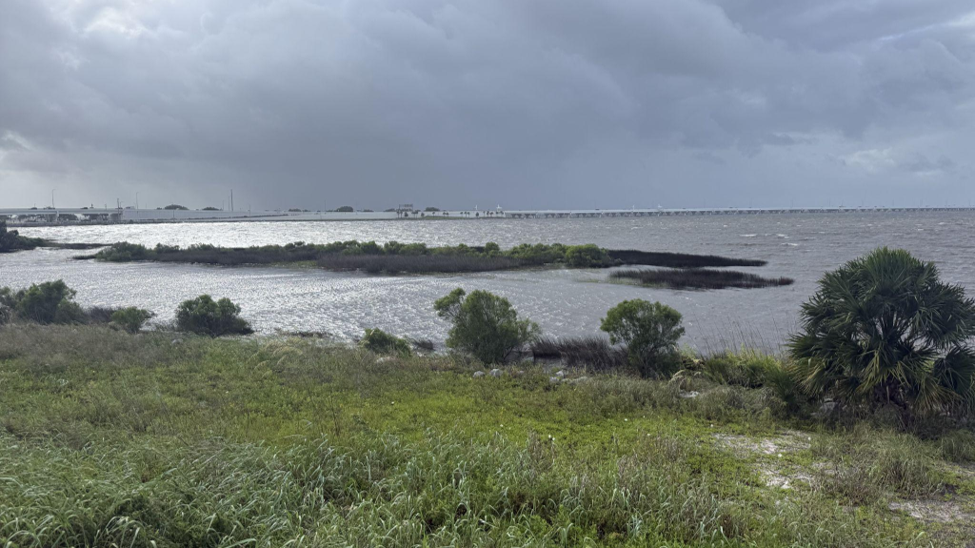
A living shoreline is an approach that uses natural materials and native vegetation, such as mangroves, oyster reefs, and salt marshes to help reduce erosion by creating a barrier, while also supporting the coastal habitat and wildlife.
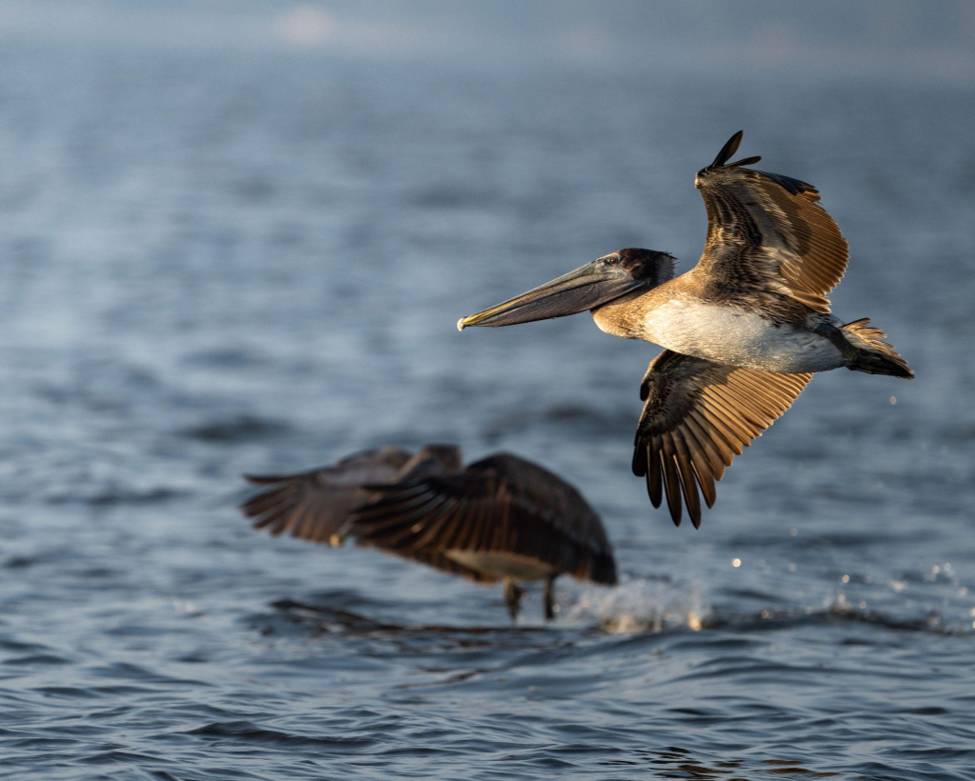
Living shorelines achieve this goal by absorbing wave energy, trapping sediment, and creating thriving habitats for birds, fish, and other wildlife. Living shorelines have many benefits, such as serving as nursery grounds for fish, improving water quality, supporting the growth of marsh grass, and providing feeding areas for birds.
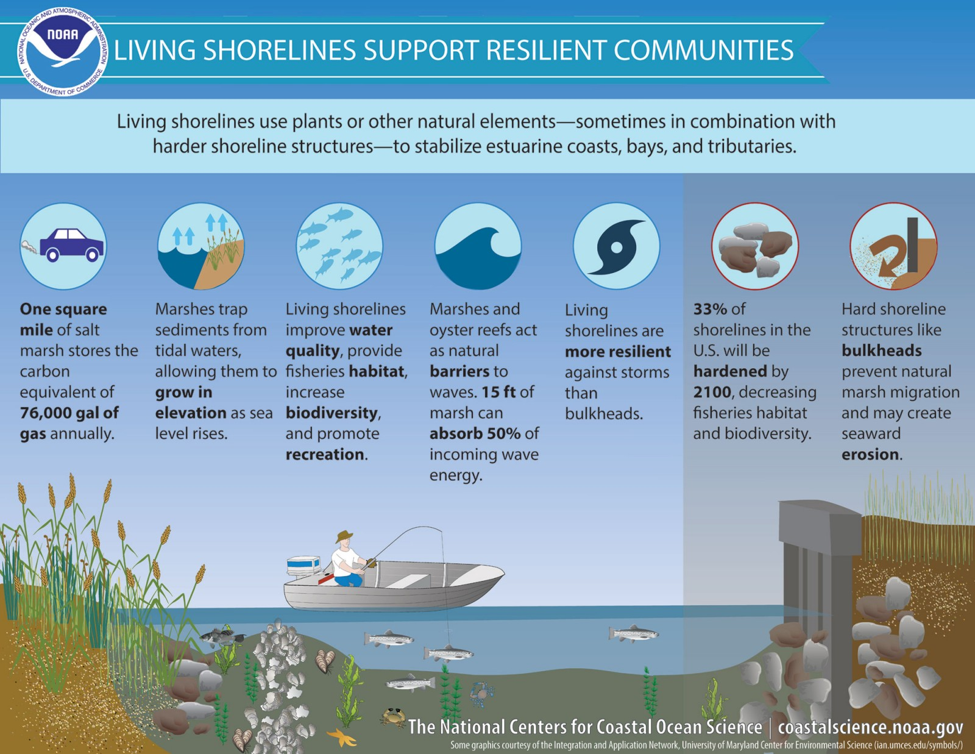
Since they become self-sufficient once they are fully established, they are also more cost-effective than the maintenance and replacement costs of traditional hard structures, like seawalls and bulkheads.
The benefits of living shorelines can be seen in projects throughout the Gulf Coast region. One such example is the Pensacola Bay Living Shoreline Project. This is a large-scale living shoreline that will be constructed in southwestern Pensacola Bay near the Naval Air Station and the entrance to Bayou Grande. There are three sites included in this project: Site A – White Island, Site B – Magazine Point at NAS Eastern Shore; and Site C – Sherman Inlet/Lake Frederic at NAS Southern Shore.
This project will construct almost three miles of submerged reefs, emergent breakwaters, and will create about 71 acres of marsh habitat, 34 acres of sandy shoreline habitat, and 37 acres of submerged aquatic vegetation habitat.
The Pensacola Bay Living Shoreline Project has been supported through a combination of federal, state, and local funding sources. Project planning, design, construction, and long-term monitoring have been made possible through partnerships with organizations focused on coastal restoration, environmental conservation, community resilience, and infrastructure improvement. To learn more about the project click here: Pensacola Bay Living Shoreline Project
Another important effort in the region is the Living Shoreline Assistance Program offered through the Pensacola & Perdido Bays Estuary Program. PPBEP helps make living shorelines more accessible by providing financial and technical support to chosen applicants so that landowners can create a living shoreline on their waterfront property. More information about this program can be found here: Pensacola & Perdido Bays Estuary Program
At Structural Forensic Experts, the importance of shoreline resilience hits close to home. With our office being located in Gulf Breeze, Florida, part of our team works and lives along the Gulf Coast. The health of our waterways and shorelines directly impacts our communities, so it’s especially important that we have valuable projects, like living shorelines, that benefit both people and the environment.
References:
- Florida Living Shorelines, https://floridalivingshorelines.com/, accessed June 11, 2026.
- Escambia County Florida, Pensacola Bay Living Shoreline Project, https://myescambia.com/open-government/projects/project-details/nas-pensacola-bay-living-shoreline-project, accessed June 11, 2026.
- Pensacola & Perdido Bays Estuary Program, Living Shoreline Assistance Program, https://www.ppbep.org/livingshorelines, accessed June 11, 2026.
- NOAA Fisheries, Understanding Living Shorelines, https://www.fisheries.noaa.gov/insight/understanding-living-shorelines, accessed June 11, 2026.