Pensacola is often referred to as “America’s First Settlement,” with its origins dating back to 1559 when Spanish explorer Don Tristán de Luna established one of the earliest European settlements in what is now the United States. Pensacola’s long history has contributed to a rich architectural landscape that is still visible today. Much of this history can be experienced throughout the Pensacola historic districts which include the Palafox Historic Business district; the Pensacola Historic District, located in the heart of downtown; the neighborhoods of North Hill and Old East Hill; and the Governmental Center District.
The Pensacola Historic Preservation and Restoration Commission1 was founded in 1967 by local community leaders. This organization was established to preserve Pensacola historic monuments, buildings, and artifacts for the education and enjoyment of the public. It also supports research and shares historical information through written, audio, and visual resources to promote awareness of Florida’s history. Since 2013, the UWF Historic Trust now oversees many of Pensacola’s historic sites, collections, and educational programs.
In addition to oversight by the UWF Historic Trust, the City of Pensacola also has an Architectural Review Board, which approves or disapproves plans for buildings to be erected, renovated, or razed within the historic districts. The Architectural Review Board consists of seven members appointed by the Pensacola City Council. Two members are from the UWF Historic Trust; one member is either a member of the City Planning Board or a resident property owner of the Pensacola Historic District, North Hill Preservation District or Old East Hill Preservation District. Two members must be registered architects; one member must be a resident property owner of the Pensacola Historic District, North Hill Preservation District or Old East Hill Preservation District. Another member is a property or business owner in the Palafox Historic Business District or the Governmental Center District. This diverse membership helps ensure that decisions related to historic preservation, restoration, rehabilitation and reconstruction incorporate perspectives from architecture, planning, property ownership, and local history. One of the oldest architectural styles in Pensacola iscalledFrench Creole Cottage Architecture. In residential structures, French Creole design is often characterized by features that prioritize ventilation, shade, and adaptability to humid coastal environments. Common elements include raised foundations, wide front porches or galleries, and steeply pitched roofs. These design features help promote airflow through the structure while also addressing concerns related to heat, rainfall, and flooding. This style, most prominent from 1790-1850, was inspired by a blend of French, Spanish, Caribbean, and Native American heritages. Pensacola is reminiscent of New Orleans, mainly due to the French Creole Cottage architecture.
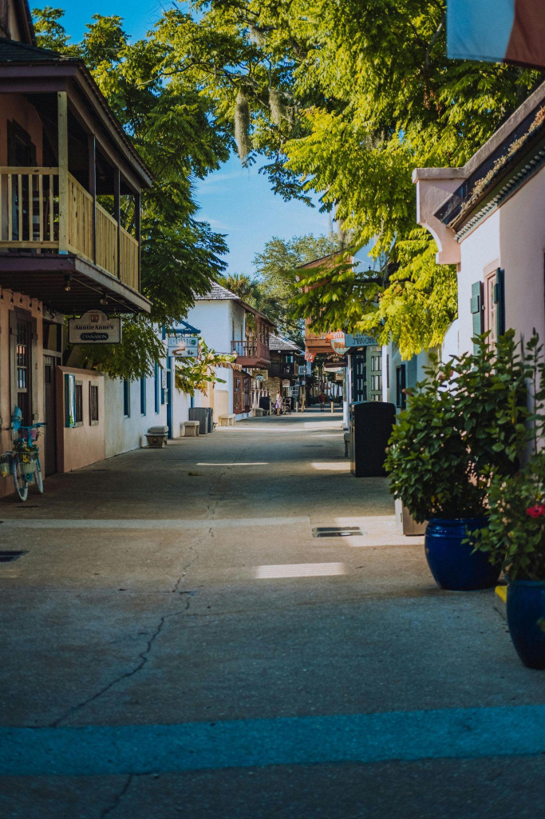
TheLavalle House, built in 1805, is the oldest standing example of French Creole Cottage construction in Pensacola. In 1968, the Historic Pensacola Preservation Board (HPPB) purchased the Lavalle House and moved it from its original location at 111 West Government Street to its current site at 201 East Church Street. Restoration efforts began the following year, focusing on preserving and interpreting the structure for public viewing. Further interior restoration work was completed in 1985, when the house was configured as a two-room living space intended to reflect how it may have appeared when first occupied by tenants. Although the original property once included a separate kitchen building, it was not reconstructed as part of the restoration. As a result, the south (or “back”) room was arranged to represent a combined kitchen, dining, and living area, while the north (or “front”) room was rehabilitated as a multifunctional bedroom and living space. This layout helps illustrate how compact, functional living arrangements were adapted within early residential structures.
As the city developed,Greek Revival architecture became more prevalent. This formal design language was influenced by broader national architectural trends of the mid-19th century. The Greek Revival style is often characterized by symmetrical façades, simple rectangular forms, and the use of columns or column-like details that reference classical Greek design.
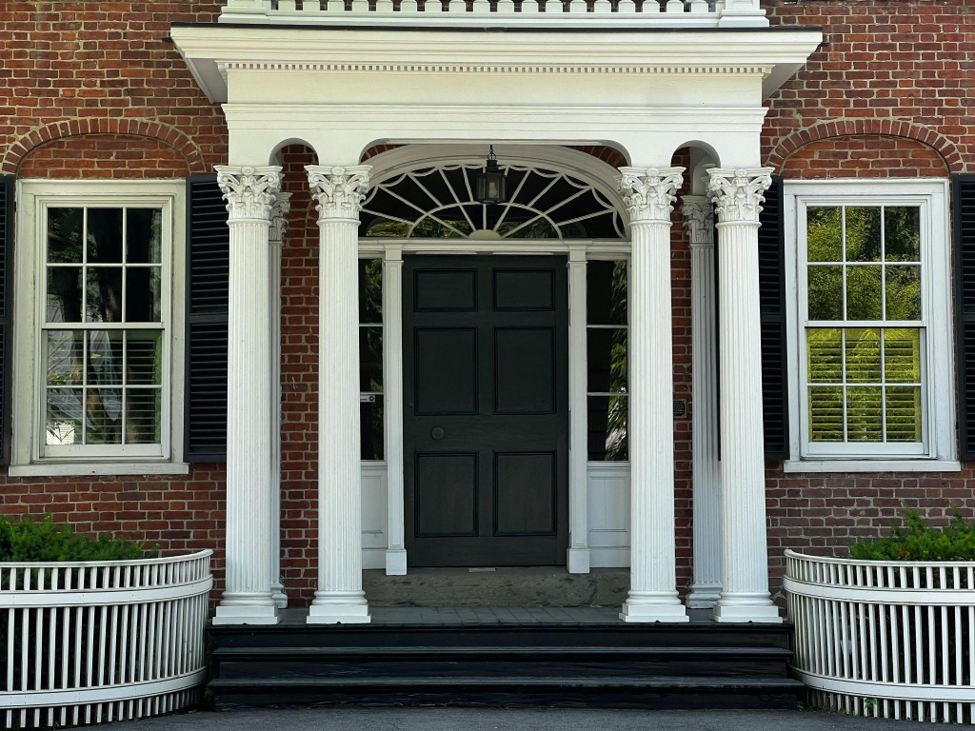
One of the best examples of Greek Revival architecture is the Dorr House, which was built in 1871. The home faces historic Seville Square and is located at 311 South Adams Street. The property was added to the National Register of Historic Places in October 1974 and was later purchased by the Historic Pensacola Preservation Board in 1975 for preservation and interpretation.
By the late 19th century, Folk Victorian architecture became popular. Common characteristics of Folk Victorian architecture include turned porch posts, decorative spindlework, and modest trim details along rooflines and porches. These elements were often made possible by the increased availability of mass-produced wood trim and architectural components, making decorative detailing more accessible to a wider range of homeowners.
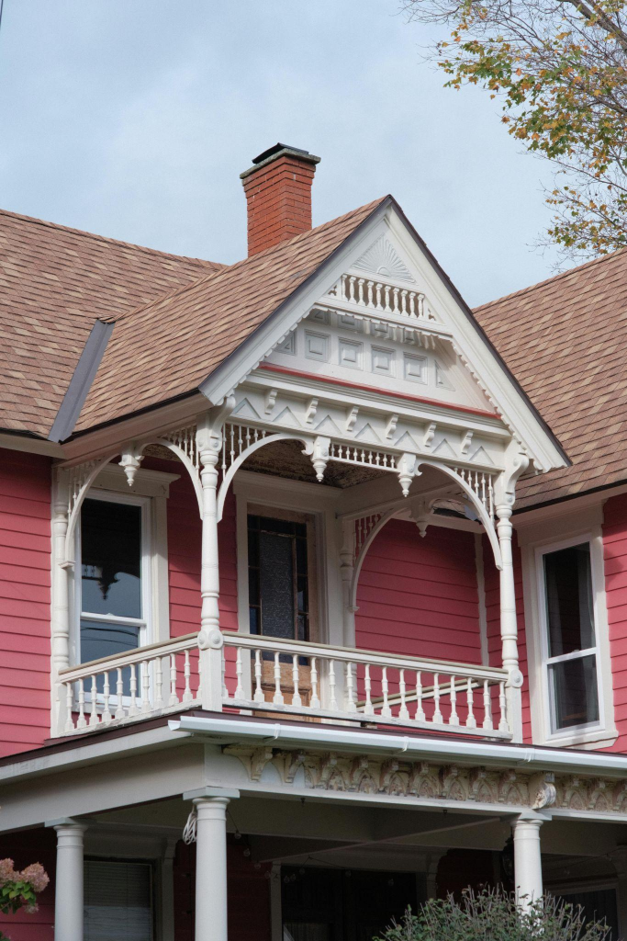
A strong example of Folk Victorian influence is the Lear/Rocheblave House, built circa 1890 and located at 214 East Zaragoza street. Since 1988, a series of restoration and grant-funded projects have supported the continued development of the Lear/Rocheblave House as a museum house. Early interpretive plans, guided by Historic Pensacola Preservation Board leadership, explored presenting the home as a “Grandma’s Attic” style experience designed to evoke a sense of everyday life from the past. By 1996, the Lear/Rocheblave House was formally launched as a 1920s boarding house with room layouts and objects reflecting the lifestyle and characteristics of Pensacola during that era.
For more than 450 years, Pensacola has continued to grow and evolve, developing a unique blend of architectural styles shaped by its long history, coastal environment, and cultural influences.
References:
- The City of Pensacola, Historic Preservation, https://www.cityofpensacola.com/3414/Historic-Preservation, accessed June 4, 2026.
- The City of Pensacola, Architectural Review Board, https://www.cityofpensacola.com/164/Architectural-Review-Board, accessed June 4, 2026.
- Historic Pensacola, Museums & Historic Properties, https://historicpensacola.org/plan-your-visit/museums-properties/, accessed June 4, 2026.
Historic Pensacola, About Us, https://historicpensacola.org/about-us, accessed June 5, 2026.