As summer winds down, America’s beach towns are beginning to catch their breath after months of welcoming millions of visitors. While beach towns are known for their scenic shorelines and laid-back atmosphere, the infrastructure that supports them is anything but simple. Accommodating large seasonal crowds requires careful planning, from transportation networks and pedestrian access to public amenities and environmental protection. This post will explore how iconic beach communities have designed infrastructure that supports tourism while meeting the unique challenges of coastal environments.
Atlantic City: Where the Boardwalk Began
For many beach vacationers, their trip is not complete without a stroll along the boardwalk. Whether it’s to enjoy amusement rides, grabbing an ice cream cone, shopping, or just taking in the ocean views, boardwalks have become a staple of the summer beach experience. But long before they became a tourist attraction, boardwalks were created to solve a practical problem.
In 1870, Atlantic City, New Jersey, constructed the nation’s first boardwalk. The original footwalk measured eight feet wide, stretched one mile along the shoreline, and was approximately one foot above the sand. The purpose of the footwalk was to keep sand from being tracked into beachfront hotels and railroad cars. What began as a simple wooden walkway quickly proved to be an innovative infrastructure solution, improving access to the beach while helping businesses keep their properties clean.
More than 150 years later, the boardwalk now stretches just over four miles, reaching 60 feet in width, and stands about 12 feet above sea level. While its purpose has evolved from a simple walkway to a world-famous destination, its construction continues to reflect the demands of a coastal environment. The deck is built with specially treated Southern yellow pine supported by Douglas fir joists, while concrete-encased steel beams provide structural support and galvanized aluminum railings help resist corrosion from the salty ocean air. Since 2001, the city has used Bethabara (also known as Ipe), a durable Brazilian hardwood, to replace damaged planks, which are still arranged in its famous herringbone pattern that was first introduced in 1916. Today boardwalks help manage pedestrian traffic, protect fragile dunes, and create vibrant public spaces that support the local economy.

Rehoboth Beach: Engineering a Coastal Defense
As the nation’s first state, Delaware is home to one of the East Coast’s most beloved seaside destinations. Rehoboth Beach’s original boardwalk was first constructed in 1873 on the high ground between the beach and Surf Avenue, which once stretched the length of the oceanfront.
Throughout the past 150 years, many different coastal storms have destroyed parts of the boardwalk, surrounding businesses and homes.
That history illustrates one of the central challenges of coastal engineering: infrastructure must be designed not only to serve a community, but also to adapt to the ever-changing coastal environment. One example can be found in a major flood and coastal storm damage reduction project spanning Rehoboth Beach and neighboring Dewey Beach.
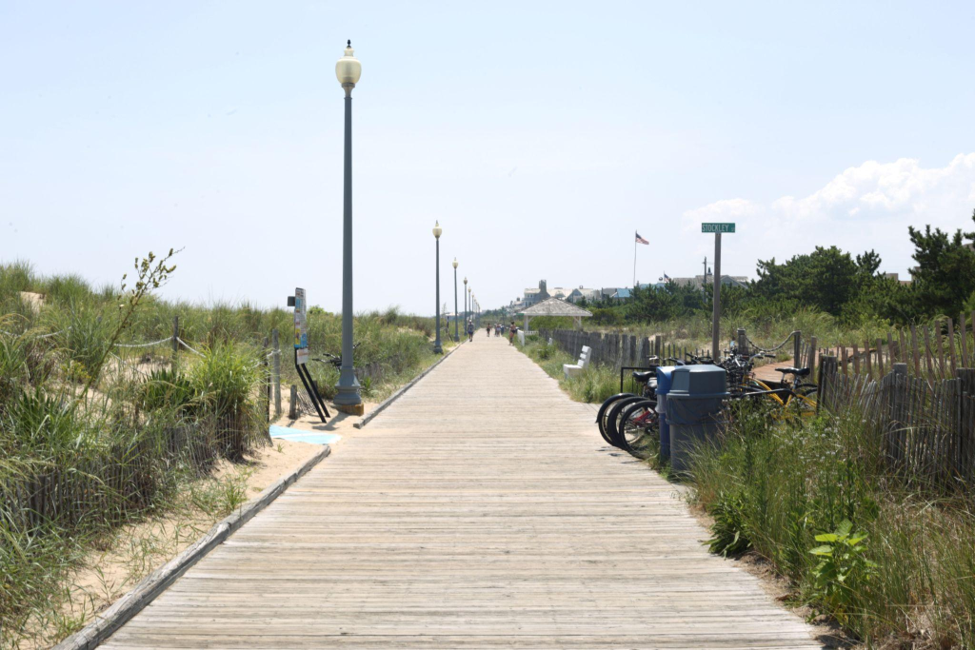
The project was designed as one continuous coastal protection system stretching approximately 13,500 linear feet, from the northern end of Rehoboth Beach to the southern boundary of Dewey Beach. Rather than relying solely on the boardwalk or other hard infrastructure to protect the shoreline, the project uses an engineered beach and dune system to create a buffer between the Atlantic Ocean and the developed areas behind it. The design also incorporates dune grass and sand fencing to help stabilize the dunes and retain sand, while periodic beach nourishment replaces sand lost through natural erosion.
Construction of the project was initially completed in 2006, with repairs and renourishment taking place multiple times in the years since. That ongoing maintenance is an important part of the engineering strategy. The boardwalk we know today stretches approximately one mile along Delaware’s coastline and it is designed to accommodate heavy seasonal tourism without sacrificing the town’s welcoming, small-community feel.
Hilton Head Island: Engineering with Nature in Mind
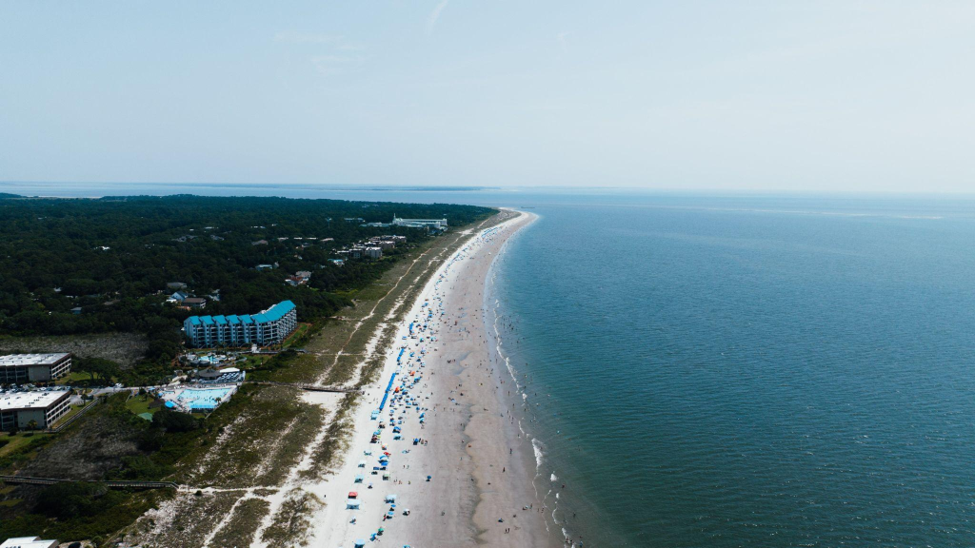
While some beach communities have adapted their infrastructure over time, Hilton Head Island in South Carolina took a different approach by incorporating environmental stewardship into its development from the beginning. Developer Charles Fraser established Hilton Head’s first resort community in 1957. His goal was to create a beautiful coastal resort while still respecting the natural environment by building homes away from the waterfront, establishing deed restrictions, and using sustainable land-planning standards. Since 2019, any new town building in Hilton Head has to be LEED-Certified. This helps ensure fewer carbon emissions and an increase in water conservation. These development standards help protect the island’s maritime forests, wetlands, and dunes, while an extensive network of more than 60 miles of multi-use pathways encourages residents and visitors to walk or bike instead of relying solely on vehicles.
Venice Beach: Adapting to a Dynamic Coastline
Coastal engineering challenges, of course, vary depending on location. Along the US West Coast, communities like Venice Beach, California, must address both coastal erosion and seismic activity.
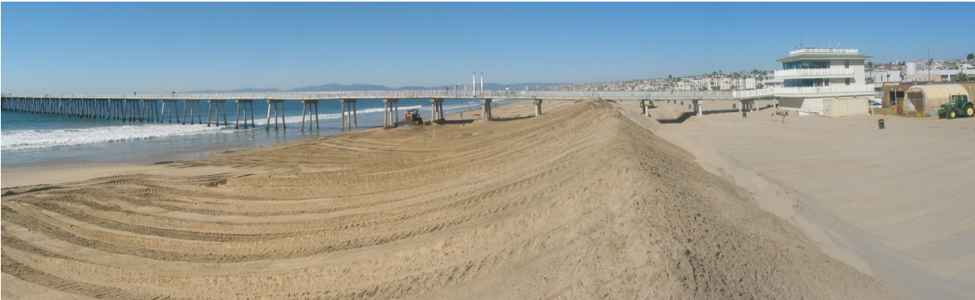
West Coast beaches feature dramatic cliffs, cooler water, and a stronger surf. Most visitors going to the West Coast look forward to a more rugged, dramatic scenery and better surfing conditions. Due to the influence of waves, currents, and man-made structures such as storm drains, the natural movement and replenishment of sand along the coastline can be disrupted. Venice Beach, one of Los Angeles’s most recognizable beach destinations, attracts millions of visitors each year with its iconic Ocean Front Walk, bike paths, and recreational areas. Beach protection implemented by Los Angeles County for Venice Beach, along with Zuma Beach, Dockweiler State Beach, and Hermosa Beach, centers around temporary sand berms to protect facilities like public restrooms, public parking lots, lifeguard headquarters, and other infrastructure. These berms are constructed by scraping sand from the foreshore by bulldozers and are typically between 12 to 16 feet high.
Between transportation, sustainability, and resilience, each beach community faces its own unique challenges and requires innovative and ongoing engineering practices.
References:
- Hilton Head Island’s Commitment to Sustainability
- Atlantic City’s First Boardwalk – June, 1870 | Atlantic County, NJ
- The Atlantic City Free Public Library – Atlantic City FAQ’s
- Sustainable Practices on Hilton Head Island
- Beach Erosion & Restoration – Beaches & Harbors
- Microsoft Word – LACO_SLR_Vulnerabilty_FinalReport_19Apr2016.docx Delaware Coast from Cape Henlopen to Fenwick Island, Rehoboth Beach/Dewey Beach, DE > Philadelphia District & Marine Design Center > Fact Sheet Article View