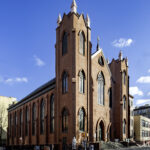
Towering cathedrals, pointed arches, stained-glass windows,and gargoyles are all terms that might come to mind when you hear the word “Gothic.” Today, Gothic architecture is often associated with darkness, mystery, and and even horror. However, the origins of the term are far less dramatic and the architecture was created from a very practical pursuit: building higher, more spectacular religious structures going towards the light.
Interestingly, the medieval builders who created these remarkable buildings would not have called their work “Gothic.” This term came centuries later, during the Renaissance, when critics used it to describe medieval art and architecture as monstrous and lacking taste. So, what began as a criticism eventually became the name we know today for this iconic architectural style.
Behind these ornate structures, was a remarkable engineering feat. As the builders developed the taller walls and large windows, they had to find a structural solution to support their efforts. One of the most recognizable was the flying buttress.
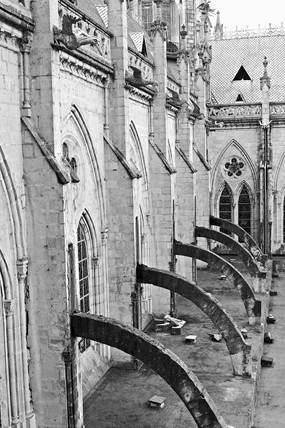
As churches grew taller and incorporated increasingly expansive vaulted ceilings and larger windows, builders had to find ways to manage the outward forces generated by those heavy stone vaults. Earlier structures relied on thick walls and solid buttresses for support, but these methods limited the size of windows and the amount of light that could enter the building. These external supports consist of an angled masonry structure that extends from the upper portion of a wall to an exterior pier or column. The buttress connects to the wall through an arch, allowing forces from the roof and walls to be transferred outward and down into the ground. This system provided both vertical and lateral support while allowing builders to create taller walls and larger openings for windows.
One example of how important the flying buttresses are in Gothic architecture is the Notre-Dame Cathedral in Paris. Both visually striking and functional, the flying buttresses have been modified several times over the last few centuries. Notably, in the 19th century restoration led by architect Eugène Viollet-le-Duc, new buttresses were added to the nave and other parts of the cathedral to ensure its structural stability.
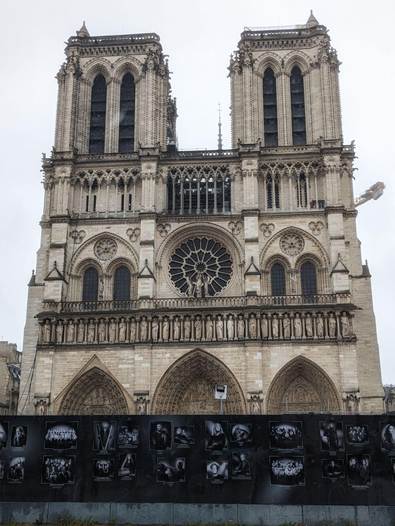
During the devastating 2019 fire, the Notre-Dame’s flying buttresses remained mostly intact, despite the roof and spires receiving significant damage. The flying buttresses were able to prevent the entire building from collapsing. While they are decorative and have become an iconic visual element of Gothic architecture, they play a fundamental role in the structural design of these buildings too, even all of these years later.
The development of the flying buttress was not the result of a single invention or a formal engineering process. Medieval builders did not have engineers and architects in the modern sense, nor did they have the structural analysis tools available to designers today. Instead, much of their knowledge came from craftsmanship, geometry, and trial and error. The flying buttress emerged from this gradual process of experimentation and refinement.
The underlying principles of buttresses remain relevant in modern structural engineering. Contemporary buildings use different materials, and structural systems, but engineers still rely on structures that transfer and resist forces to achieve greater height and stability. The Burj Khalifa in Dubai, for example, uses a Y-shaped structural system in which three wings support one another around a central hexagonal core. While this system is far removed from the stone flying buttresses of a Gothic cathedral, it demonstrates how the fundamental concept of using one structural element to reinforce another continues to shape modern architecture.
For all the structural innovation behind Gothic architecture, its modern reputation is often less about engineering and more about atmosphere. So how did an architectural style created to convey grandeur and spirituality become so closely associated with ghosts, haunted houses, and Halloween?
Gothic literature in the 18th and 19th centuries reinforced that image, using castles, monasteries, ruins, and old cathedrals as settings for stories of horror and the supernatural. Specifically, Horace Walpole’s The Castle of Otranto is widely regarded as the first Gothic novel. Set in a medieval castle with secret passageways and supernatural events, the novel was influential in connecting Gothic architecture with horror. Later works such as Mary Shelley’s Frankenstein, Bram Stoker’s Dracula, and Edgar Allan Poe’s stories further cemented the connection between the word “Gothic” and mystery and death.
So, the next time you see a Gothic cathedral, take a closer look at those flying buttresses. What do you think – architectural masterpiece or a little spooky?
References:
The Origins and Evolution of Gothic Architecture | ArchDaily
The Flying Buttresses of Notre Dame de Paris CathedralAll About the Buttress and Other Wall Supports