As the United States celebrated its 250th anniversary this past July, many people are reflecting on the nation’s history and landmarks that have come to represent it. Few buildings are as instantly recognizable as the White House. For more than 2 centuries, its grand columns, iconic porticos, and brilliant white exterior have served as the backdrop for some of the country’s most significant moments. Beyond its familiar facade are architectural details that are likely unknown to most: Who was the architect? Why is the White House so perfectly symmetrical? Was it always painted white? And why is the Oval Office oval?
Why Is The White House Symmetrical?
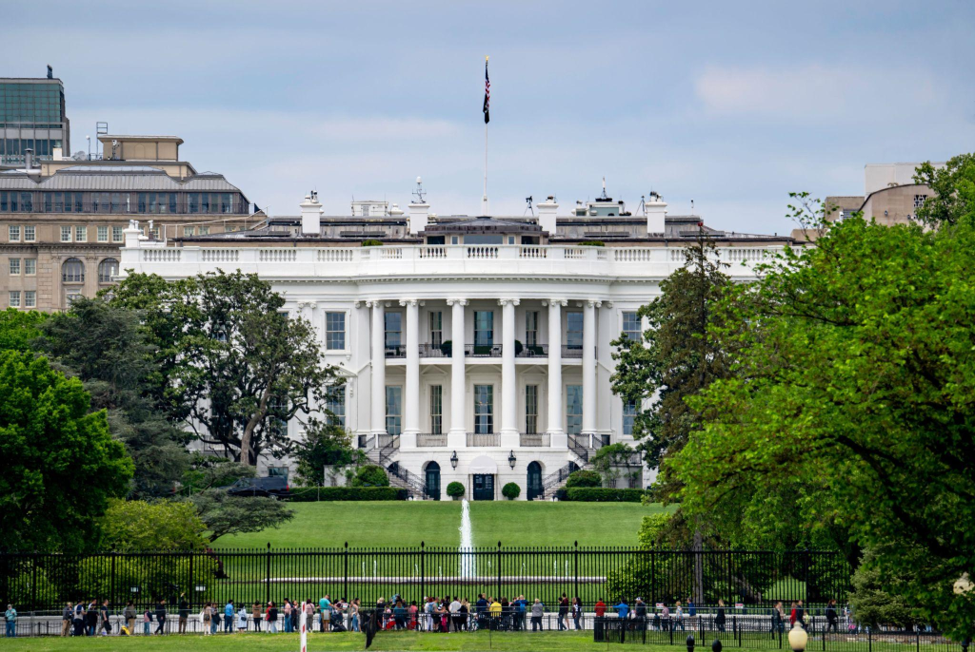
Have you ever noticed that The White House is perfectly symmetrical? The windows line up perfectly, the columns frame the entrance evenly, and each side mirrors the other. This sense of symmetry was not an accident. It was a defining feature of the Neoclassical architecture style that was popular in the late 1700s when the White House was first designed and constructed.
When plans for the President’s House were announced in 1792, Irish-born architect James Hoban submitted the winning design. Inspired by the classical architecture of ancient Greece and Rome, Hoban created a residence that emphasized proportion, balance, and simplicity. These principles were meant to convey stability, order, and permanence for the newly established United States.
Recent proposals to redesign the East Wing have sparked conversations about how changes could affect the White House’s traditionally balanced appearance, which highlights how closely its architectural identity is tied to symmetry.
Why Does The White House Have Two Different Porticos?
One of the White House’s most recognizable features is its grand columned entrances, known as porticos. While they may seem like they have always been part of the building, neither the North nor South Portico appeared in James Hoban’s original design.
The South Portico was completed in 1824 during President James Monroe’s administration. Hoban designed the South Portico with a curved design opening up to the lawn to enhance the building’s aesthetic and provide a grand entrance that faces the Potomac River.
Then in 1829, during President Andrew Jackson’s administration, the North Portico, which faces Pennsylvania Avenue, was added. Its stately design creates the image most often associated with official ceremonies, state arrivals, and presidential events.
Was The White House Always White?
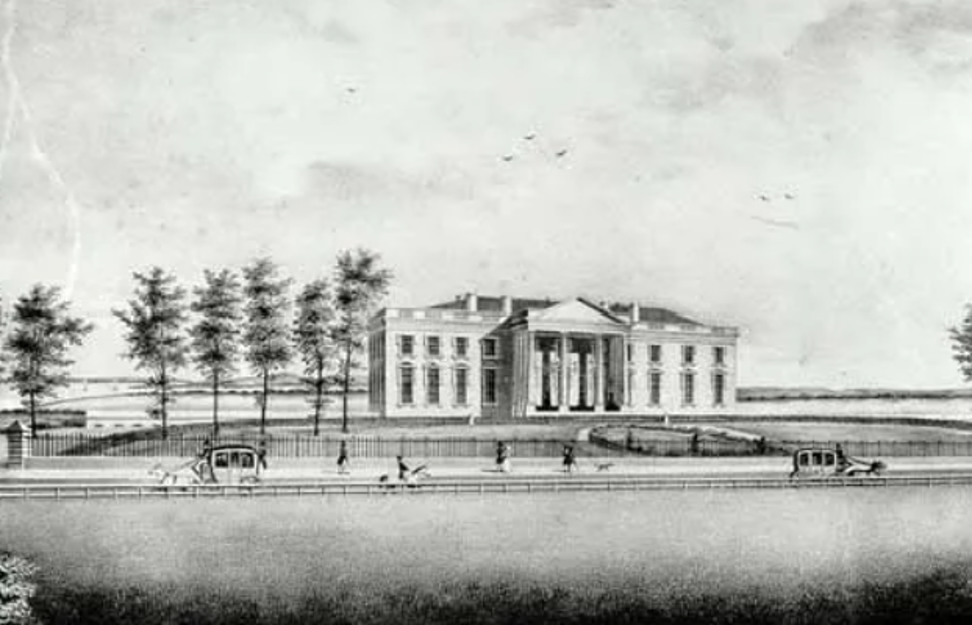
Despite its name, the White House wasn’t always the bright white landmark we know today. When construction began in 1792, the exterior was built using Aquia Creek sandstone, a light gray stone quarried in Virginia. While the stone gave the building an elegant appearance, it was also porous and vulnerable to weathering. Six years into construction, a lime-based white wash was applied to the outside to help weatherproof the house.
When British forces set fire to the White House during the War of 1812 in 1814, the building’s white exterior was already well established. A common myth suggests that it was painted white to cover the scorch marks left by the fire, but the protective whitewash had been applied years before the attack. Following the rebuilding of the White House, the exterior continued to be whitewashed until 1818, when a more durable white lead paint replaced the original coating.
Although the building had been informally known as the “White House” for years, the name was not made official until 1901 by President Theodore Roosevelt.
Keeping The White House looking its best is no small task. It takes approximately 570 gallons of paint to cover the building’s exterior.
Why is the Oval Office Oval?
While first president George Washington didn’t actually ever reside in the White House, he may have inspired the unique elliptical shape of the Oval Office.
Before moving into the President’s House in Philadelphia in 1790, George Washington ordered the building’s straight rear walls to be rebuilt into a semicircular shape. These curved walls are believed to have inspired the design of the Blue Room in the White House, an oval-shaped reception room created for formal gatherings.
The oval shape served a purpose beyond aesthetics. During formal receptions known as “levees,” the rounded layout allowed guests to gather in a semicircle, creating abalanced arrangement centered around the president. The design helped establish a sense of ceremony while allowing the president to interact with guests in a more unified setting.
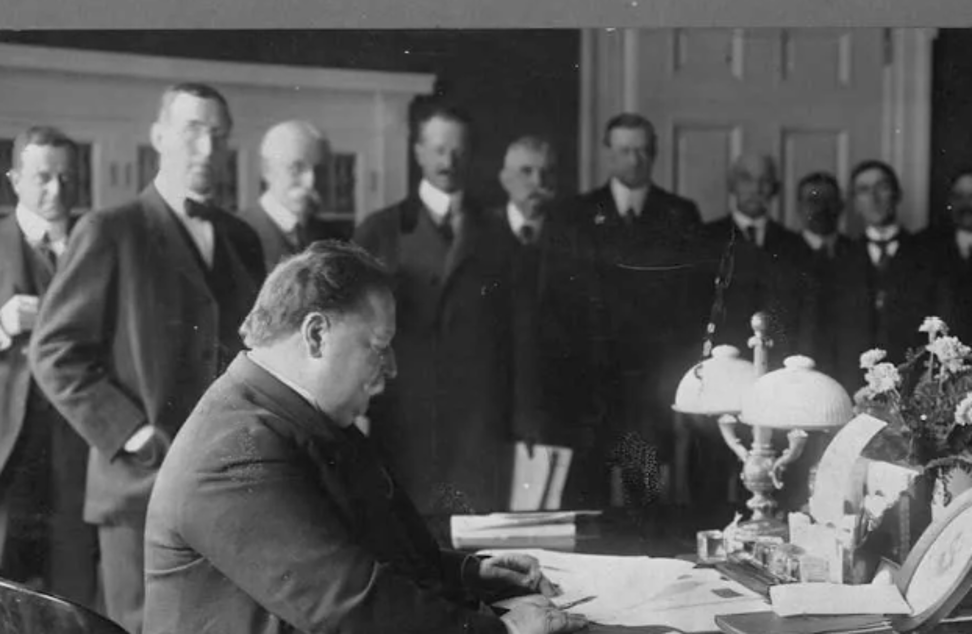
More than a century later, the idea of the oval room was carried into the design of the Oval Office itself. After taking office in 1909, President William Howard Taft held a competition to expand the West Wing and replace the temporary executive offices that had been created during Theodore Roosevelt’s administration. The winning architect, Nathan C. Wyeth of Washington, D.C., designed the West Wing expansion along with a new office specifically for the president. Today, the Oval Office remains one of the world’s most recognizable rooms because of both its historical significance and its distinctive architectural design.
The White House by the Numbers
The White House may be instantly recognizable from the outside, but its interior and grounds are much larger than many people realize. Here are a few numbers that might surprise you:
- 132 rooms
- 35 bathrooms
- 6 levels
- 412 doors
- 147 windows
- 28 fireplaces
- 8 staircases
- 3 elevators
The next time you see the White House, you may notice a few more details hidden in plain sight.
References:
- “Why is the Oval Office oval?” White House Historical Association. Accessed August 4, 2026. Why is the Oval Office oval? – White House Historical Association
- “Why is the White House white?” White House Historical Association? Accessed August 4, 2026. Why is the White House white? – White House Historical Association
- “The White House Building” Whitehouse.gov Accessed August 4, 2026. The White House Building